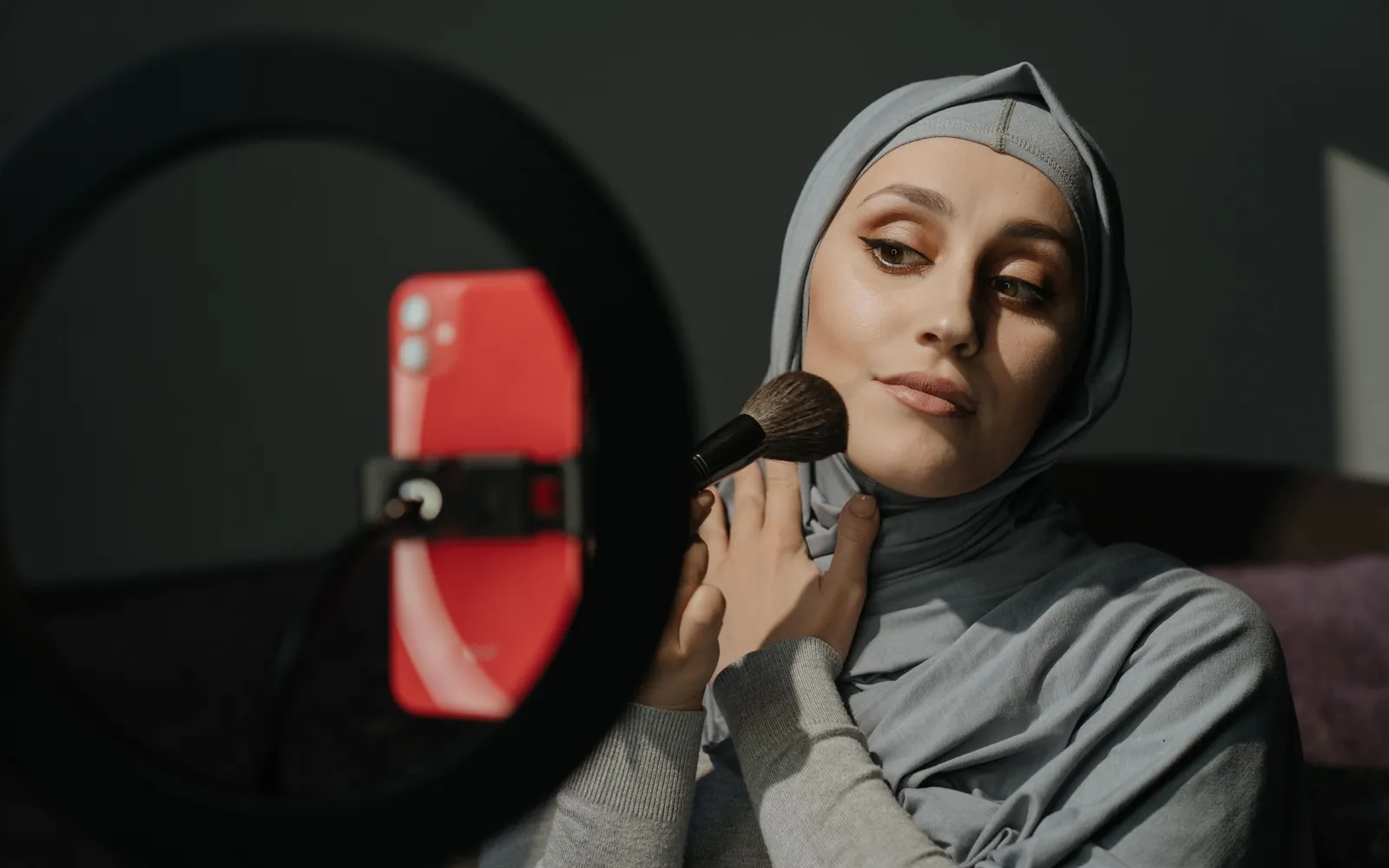

Influencer Performance Marketing in MENA: The Complete Guide
Quick answer: Influencer performance marketing is a model where brands pay creators mainly for measurable outcomes (sales, sign-ups, installs) tracked through unique discount codes or links, instead of paying a fixed fee per post. In the GCC it works especially well because shoppers already use discount codes heavily, Arabic-first creators drive strong engagement, and brands can pay commission only on validated orders. To run it well you need three things: clean tracking, a fair commission structure, and licensed creators (the UAE Advertiser Permit and Saudi Arabia's Mawthooq license).
Most brands in the Gulf have lived through the same story. You pay a big name AED 40,000 for a reel, it gets half a million views, the comments look great, and then your sales dashboard barely moves. Nobody is lying. The views were real. They just weren't buyers.
Performance marketing flips that deal. The creator gets paid when the audience actually buys. The brand stops paying for hope. And the creators who are genuinely good at selling finally get rewarded for it.
This guide is everything we've learned running creator and affiliate campaigns for brands like Noon, Namshi, Bloomingdale's, Level Shoes and Max Fashion across a network of around 20,000 creators in the GCC. No fluff, just how it works.
What is influencer performance marketing?
Influencer performance marketing is the overlap between influencer marketing and affiliate marketing. The creator promotes a product the way any influencer would (stories, reels, TikToks, Snaps), but every sale they drive is tracked back to them, and they earn a commission on it.
The key difference from classic influencer marketing is what you're buying:
- Classic influencer marketing buys attention: reach, views, impressions.
- Performance influencer marketing buys outcomes: orders, revenue, new customers.
Attention still matters. It's just no longer the thing you pay for.
Why the Gulf is built for this model
Performance creator marketing works everywhere, but a few things make the GCC unusually good at it.
Discount codes are part of the culture. Gulf shoppers actively look for a code before checking out. A creator saying "use my code" isn't awkward here. It's expected, and it makes attribution simple.
Arabic-first content converts. Industry research on Saudi Arabia reports that Arabic-first campaigns can generate 35 to 50% higher engagement than translated English content. A creator talking in their own dialect to their own people sells in a way a polished global ad can't.
Saudi Arabia is the center of gravity. Saudi Arabia is estimated to hold around 40% of GCC influencer marketing spend, with TikTok and Snapchat both deeply embedded in daily life.
Regulation has professionalized creators. Licensing in both the UAE and Saudi Arabia means brands now work with registered, accountable creators. That makes commission contracts easier to sign and enforce.
The 5 ways to pay creators (and when to use each)
| Model | How it works | Best for | Risk sits with |
|---|---|---|---|
| Flat fee | Fixed payment per post or package | Launches, awareness, top-tier talent | Brand |
| Cost per sale (CPS) | % commission on net sales from the creator's code or link | Ecommerce, fashion, beauty, electronics | Creator |
| Hybrid | Small fixed fee plus commission | Strong mid-tier creators who want some security | Shared |
| Cost per action (CPA) | Fixed amount per sign-up, install or first order | Apps, fintech, delivery, subscriptions | Creator |
| Gifting / barter | Product in exchange for content | Seeding, micro creators, UGC | Shared |
In practice, the best programs mix them. Pure commission for the long tail of creators, hybrid deals for the ones who've proven they sell, and the occasional flat fee for a launch moment. We break down the math in Cost Per Sale vs Flat Fee Influencer Deals.
How tracking works in the GCC: codes vs links
Attribution is where most programs quietly fall apart. There are two main tools, and you want both.
Discount codes (for example SARA15) are the workhorse in the Gulf. They survive screenshots, WhatsApp forwards and Snapchat stories, where links get lost. The downside: codes leak. They end up on coupon sites and get used by people who never saw the creator. More on that in Discount Code Leakage.
Tracking links are precise and can't be copied into a coupon site as easily, but they break when content is shared off-platform, and many Gulf shoppers switch from the social app to the brand's app before buying.
The practical answer is to give every creator both, and to credit a sale to whichever one fires.
The part everyone forgets: validation
A sale isn't a sale until it survives returns and cancellations. That matters a lot in this region, where cash on delivery is still common and fashion return rates can be high. A clean program defines:
- When commission triggers. At Adltix, commission triggers when an order is paid, and cash-on-delivery orders earn commission on fulfillment.
- A validation window. Usually 30 to 60 days, matching the brand's return policy.
- What counts as net sales. Typically excluding VAT, shipping, returns and cancelled orders.
Put all three in writing before the first post. It saves every argument later.
The metrics that actually matter
Forget likes. These are the numbers worth watching, with the formula for each:
- Revenue per creator: net sales attributed to that creator.
- Effective cost per order: total paid to the creator divided by orders. This is how you compare a flat-fee creator against a commission creator fairly.
- ROAS: attributed revenue divided by total creator cost.
- AOV: attributed revenue divided by orders. Some creators bring bigger baskets, and that's worth paying more for.
- New customer rate: share of orders from first-time buyers. This tells you if a creator grows the brand or just discounts existing customers.
- Validation rate: validated orders divided by total orders. Low validation often means returns, fraud or leakage.
A quick example (illustrative numbers): Creator A charges a flat AED 10,000 and drives 50 orders. Effective cost: AED 200 per order. Creator B works on 10% commission and drives 180 orders at AED 350 AOV. Revenue: AED 63,000. Cost: AED 6,300, or AED 35 per order. Creator A has more followers. Creator B is the better business partner.
Compliance: what brands must check in the UAE and Saudi Arabia
This part is no longer optional.
UAE: Since 1 February 2026, anyone publishing advertising content online from within the UAE needs an Advertiser Permit from the UAE Media Council, and that covers paid and unpaid promotion. Companies and agencies are also expected to verify that the creators they contract hold a valid permit. Visiting creators apply through accredited agencies.
Saudi Arabia: Creators earning from promotional content need a Mawthooq license, which costs SAR 15,000 for three years. Non-Saudi creators need extra steps through investment and trade licensing first.
Our advice: make the permit or license number a required field in your creator onboarding, and add a clause requiring creators to keep it valid for the full contract. Full details for creators are in How to Become a Paid Creator in the UAE and Saudi Arabia.
A 90-day playbook to launch
Days 1 to 30: seed wide
Recruit 50 to 150 creators across micro and mid tiers, all on commission. Give each a unique code and link. Brief them lightly: product, key message, what not to say. Then let them create in their own voice.
Days 31 to 60: find your sellers
Rank creators by validated revenue, not views. Usually a small group drives most of the sales. Talk to them. Ask what worked. Give them early access, higher tiers or exclusive codes.
Days 61 to 90: scale what sells
Move your top sellers onto hybrid deals. Turn their best-performing content into paid ads (see UGC marketing in the GCC). Replace the bottom performers with fresh creators from the same niches that worked.
Five mistakes we see all the time
- Choosing creators by follower count. Sales data, not audience size, should decide. See Micro vs Macro Influencers in the Gulf.
- One generic code for everyone. You lose all attribution.
- No validation rules. This leads to disputes and unhappy creators.
- Ignoring Ramadan and White Friday. The Gulf calendar has its own peaks. Plan for them early (Ramadan Creator Campaigns).
- Paying late. Nothing kills a creator program faster. Your best sellers talk to each other.
How Adltix runs performance creator campaigns
Adltix is an AI-powered creator commerce and affiliate platform built for the GCC and MENA. Brands get access to around 20,000 creators across the region, pay nothing upfront, and pay commission only on tracked, validated sales. Our AI tools handle creator discovery, outreach, tracking and payouts, so brand teams can focus on product and creative. If you want to see what a plan would look like for your brand, book a 20-minute call. Comparing options? See our comparison of influencer marketing platforms in the Middle East.
Frequently asked questions
What is influencer performance marketing?
It's a model where brands pay creators for measurable results such as sales or sign-ups, tracked through unique codes or links, instead of paying a fixed fee for posting.
How much commission do influencers get in the GCC?
It depends on category margins. Fashion and beauty usually pay more than electronics or groceries. Commission is normally a percentage of net sales after VAT, returns and cancellations. See our MENA benchmarks for category ranges.
Do influencers in the UAE need a license to promote products?
Yes. From 1 February 2026, anyone publishing promotional content from within the UAE needs a UAE Media Council Advertiser Permit, including for unpaid or gifted promotions.
Are discount codes or tracking links better in the Gulf?
Use both. Codes work better on Snapchat, Instagram stories and WhatsApp shares. Links are more precise and harder to leak. Give each creator one of each.
Is performance influencer marketing good for small brands?
Yes, often more than for big ones. Paying only on sales protects cash flow and lets small brands work with many micro creators instead of betting their budget on one big name.